TIIP’s 5th Annual Symposium on System-level Investing will be held on April 14, 2026.

From Ambition to Action
System-level risks are no longer abstract or peripheral to investment performance. Climate instability, inequality, democratic fragility, financial concentration, and geopolitical disruption now operate as interlocking forces that shape beta, constrain diversification, and determine long-term portfolio outcomes. Yet most investment institutions remain organized around tools, governance structures, and decision frameworks designed for asset-level optimization—not for managing risks that arise at the level of markets and systems.
The 5th Annual Symposium on System-level Investing convenes asset owners, asset managers, fiduciaries, foundations, and field-builders to confront this implementation gap. Co-hosted by The Investment Integration Project (TIIP), the U.S. Impact Investing Alliance (USIIA), the Intentional Endowments Network (IEN), the Interfaith Center on Corporate Responsibility (ICCR), the Principles for Responsible Investment (PRI) and For the Long Term (FTLT) and sponsored by the Center for Monitored and Ethical Investment (CMEI) and Domini Impact Investments, with media partners Pensions & Investments and Chief Investment Officer magazine, the Symposium focuses squarely on what it takes to operate as a system-level investor in practice
This year’s program is organized around a core insight reflected throughout the agenda: there is no single model of system-level investing. Instead, different institutions—pension funds, global asset managers, foundations, faith-based investors, and long-horizon asset owners—exercise influence through different leverage points. Through contrasting viewpoints, candid case studies, fiduciary analysis, and tool launches, the Symposium examines how engagement, governance reform, capital deployment, standard-setting, field-building, and internal guardrails each function as system-level tools when deployed with discipline and intent.
Across the day, participants will explore:
- how fiduciary duty is evolving as systemic risks become foreseeable and material;
- how total-portfolio dashboards and decision-support infrastructure can connect system health to portfolio management;
- how stewardship, collaboration, and escalation operate at scale;
- how flexible and philanthropic capital can help build or repair markets; and
- how investors shape system outcomes not only through capital allocation, but through norms, standards, and collective action.
The Symposium is intentionally designed as a working convening—for institutions grappling with the practical challenge of moving from episodic action to durable influence, and from aspiration to repeatable practice. The goal is not consensus around a single approach, but clarity about roles, responsibilities, and operating choices that define the next standard for long-term investing in a system-shaped world.

Note: In-person attendance is limited due to space constraints. Virtual participation via Zoom will be available for those unable to attend on site. Click here for more details on the Eventbrite.
Welcome! – Monique Aiken, Managing Director @ TIIP
Opening Viewpoints Multiple Pathways to System-level Investing
This opening session sets the stage by demonstrating that system-level investing is not a single strategy, tool, or institutional model. Instead, it is expressed through different leverage points depending on role, mandate, and capacity for influence. Through four distinct vantage point, the investment office as an institution, system-level governance and accountability, portfolio construction, stewardship, and long-term philanthropic capital, the session establishes a shared premise for the day: there are multiple, credible pathways to system-level investing. Each pathway carries distinct strengths, constraints, and responsibilities, and each shapes how system-level ambition is translated into real-world decision-making under fiduciary and organizational constraints.
 Viewpoint 1 How to Organize an Investment Department as a System-level Investor – Brian Minns, Senior Managing Director, Responsible Investing @ University Pension Plan Ontario
- The day begins with the investment office itself, where system-level ambition either becomes operational or remains aspirational. Brian Minns of University Pension Plan Ontario reflects on the rare challenge of building a multi-billion-dollar investment organization from the ground up, in real time, during a global pandemic. Drawing on UPP’s formative experience, Minns explores how system-level investing can be translated from philosophy into practice through governance, culture, and incentives. From investment beliefs and reporting frameworks to hiring decisions, compensation structures, and even shared language, the session examines what it takes to hard-wire system-level thinking into the daily functioning of an investment team. The result is a grounded look at how institutional design—not just tools or strategies—determines whether system-level investing can endure, scale, and shape real decision-making under fiduciary constraints.
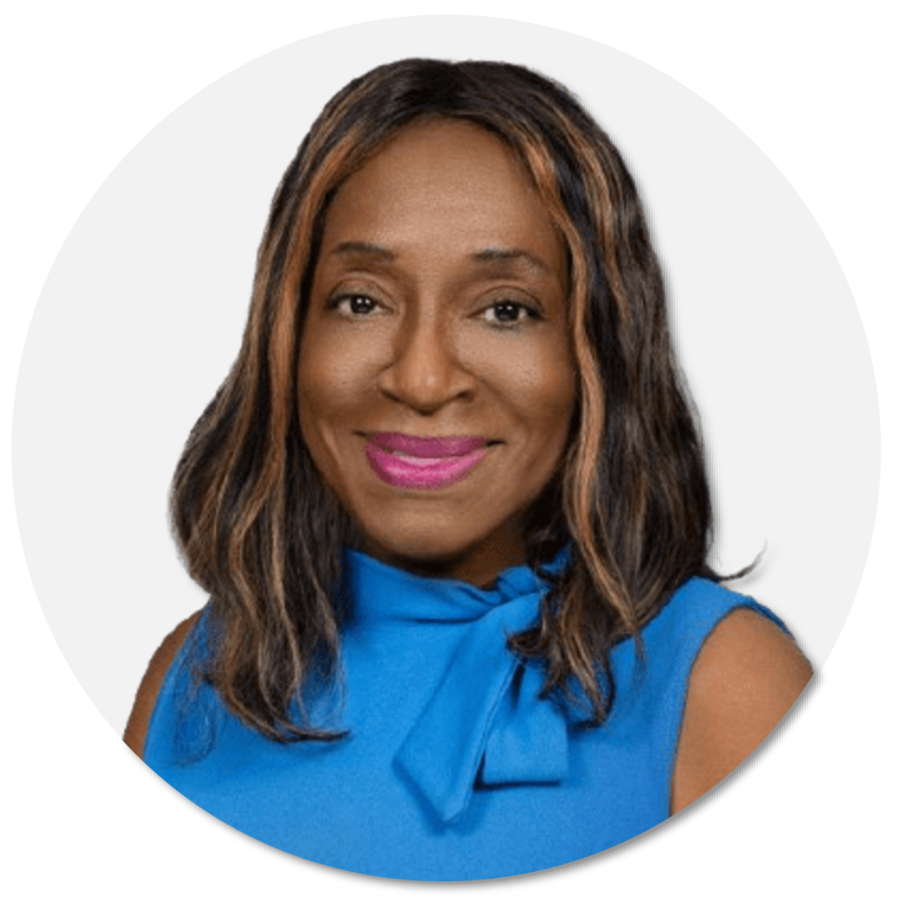 Viewpoint 2 Re-shaping System Outcomes by Addressing Governance, Power, and Accountability – Renaye Manley, Founder @ Manley Consulting Group
- Building on the limits of tool-based approaches, Renaye Manley shifts the lens from how investors act to where influence actually resides.Drawing on her experience advising asset owners, labor organizations, and corporate leaders, Manleyreframes issues often treated as “social” or “values-based” as structural determinants of system performance and long-term returns. This session examines how governance, power, and accountability shape financial outcomes at scale—and how asset owners, in particular, can move beyond episodic diversity or stakeholder initiatives toward durable approaches that integrate equity into stewardship strategies, engagement priorities, and accountability mechanisms. Manley explores where investor influence is most credible, how coalitions and governance reforms can shift norms, and why ignoring power dynamics ultimately undermines both fiduciary objectives and system resilience.
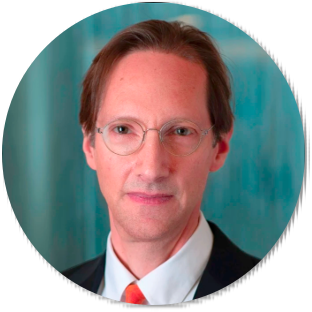 Viewpoint 3 Deploying Engagement at Scale Within the Constraints of Asset Management – Adam Kanzer, Head of Stewardship – Americas @ BNP Paribas Asset Management
- In an asset management context, scale, fiduciary duty, and limited control shape what system-level action can realistically look like. Adam Kanzer of BNP Paribas Asset Management examines how engagement—when designed and deployed deliberately—can function as a systemic tool rather than a company-by-company exercise. Drawing on concrete case studies, from biodiversity effortsto protect horseshoe crabs to collaborative initiatives addressing forced and child labor, Kanzer explores when collaboration is most effective, how and when escalation becomes necessary, and what these efforts have realistically achieved in markets characterized by dispersed ownership. He also surfaces a core tension that echoes throughout the day: why acting on systemic risk is increasingly unavoidable for asset managers, yet insufficient on its own to resolve deeply embedded market-wide failures.
 Viewpoint 4 Using Long-horizon, Flexible Capital to Build and Repair Markets – Jim Casselberry, CIO @ Health Forward Foundation
- Completing the quartet, Jim Casselberry adds a market-building perspective rooted in the strategic use of philanthropic and mission-aligned capital. Drawing on his experience across foundations, family offices, public markets, and catalytic platforms, Casselberry examines how flexible capital, governance influence, and long term thinking can be deployed to unlock underinvested markets and correct structural inefficiencies. This session explores how foundations can move beyond siloed impact strategies toward integrated approaches that link investment policy, manager selection, market-building, and partnership design. Casselberry discusses where philanthropic capital is uniquely positioned to take risks others cannot, how foundations can influence system conditions without distorting markets, and why disciplined investment practices remain essential even when pursuing explicitly social outcomes. The session highlights the role of foundations as system stewards—using capital not just to fund solutions, but to help re-engineer the systems in which those solutions must operate.
State of the Industry The Next Frontier, William Burckart – William Burckart, CEO @ TIIP

Institutional investors are confronting a structural shift in how risk, return, and resilience are shaped. Climate instability, inequality, democratic fragility, and market concentration are no longer peripheral concerns—they are system-level forces that increasingly determine portfolio outcomes. Yet the dominant tools of modern investment practice, from portfolio theory to ESG integration, were not designed to manage recursive, market-wide risks. Drawing on a decade of field-building and recent work with leading asset owners, Burckart will share how system-level investing has moved from an emerging idea to an operating imperative and reflect on our central challenge: how to translate system-level ambition into repeatable governance, portfolio-wide decision-making, and durable influence on the systems that underpin long-term value creation.
Total Portfolio Dashboard A Total Portfolio Dashboard for Management of System-level Investing
If system-level investing is now an operating imperative, the next question is how institutions actually see and manage these risks across the whole portfolio. Lynn Paquin (CalSTRS) and Adam Connaker (Surdna Foundation) introduce the Total Portfolio Dashboard—a new decision-support tool designed to help institutional investors identify, manage, and act on system-level risks and opportunities across asset classes and strategies. Built for CIOs and investment teams operating in a world where beta is increasingly shaped by system health, the Dashboard translates complex system dynamics into a portfolio-wide view that connects asset allocation, stewardship, risk management, and governance.
Discussants:
- William Burckart, William Burckart, CEO @ TIIP
- Adam Connaker, Director of Impact Investing @ Surdna Foundation
- Lynn Paquin, Portfolio Manager, Sustainable Investment & Stewardship Strategies @ CalSTRS
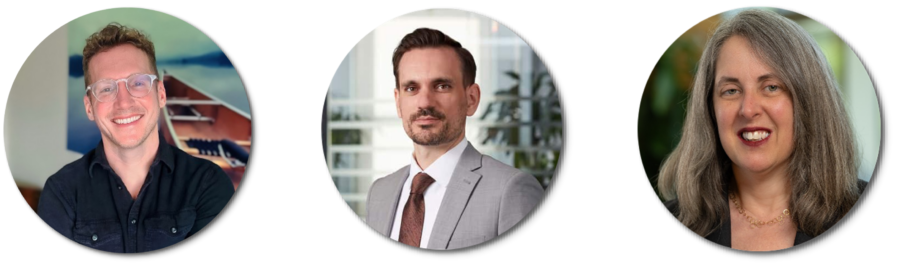
Fiduciary Duty in Focus Applying Fiduciary Duties to System-level Investing
Tools and dashboards are only actionable if they are grounded in fiduciary clarity. Maurits Dolman (Cleary Gottlieb Steen & Hamilton LLP, speaking in his own capacity) and George Suttles (Commonfund Institute) examine how fiduciary duty—properly understood—requires investors to consider risks and responsibilities that arise at the level of the financial system itself. Drawing on trust and pension law and comparative fiduciary practice, they argue that prudence today must account for foreseeable, material systemic risks such as climate change, inequality, and financial instability. The session makes the case that system-level investing is not a departure from fiduciary duty, but it’s necessary evolution in an era where long-term portfolio performance depends on system resilience.
Discussants:
- Maurits Dolmans, Senior Counsel @ Clearly Gottlieb
- George Suttles, Executive Director @ Commonfund Institute
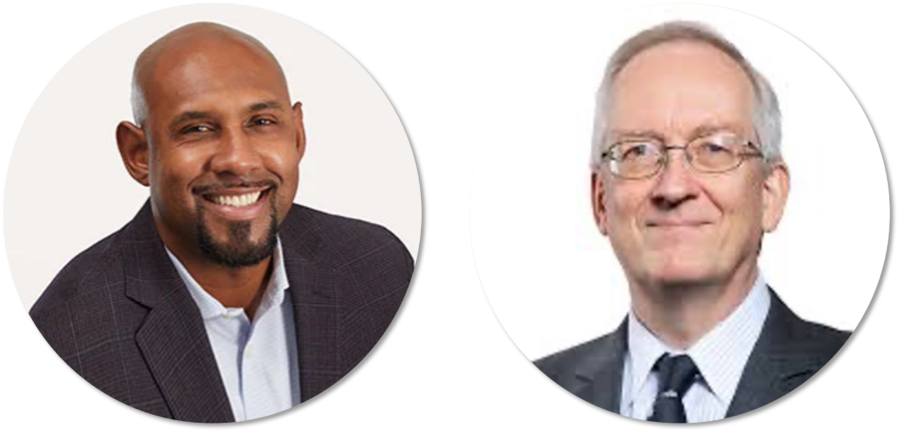
System-level Investing Award Changemaker
Book Launch Handbook on System-level Investing
As fiduciary expectations evolve, so too must the shared frameworks and reference points that guide boards, CIOs, and investment committees. Moderated by Tynesia Boyea-Robinson (CapEQ), this fireside conversation marks the launch of The Handbook on System-level Investing. Editors Jon Lukomnik and William Burckart discuss why the Handbook is arriving now—amid intensifying systemic risks, rising scrutiny of fiduciary practice, and growing recognition that diversification alone cannot protect long-term returns. Drawing on case studies from leading global investors, they explore how system-level investing has moved from theory to practice and what decision-makers need to understand as market outcomes are increasingly shaped by system health.
Moderator:
- Tynesia Boyea-Robinson, CEO & President @ CapEq
Discussants
- William Burckart, CEO @ TIIP
- Jon Lukomnik, Managing Partner @ Sinclair Capital
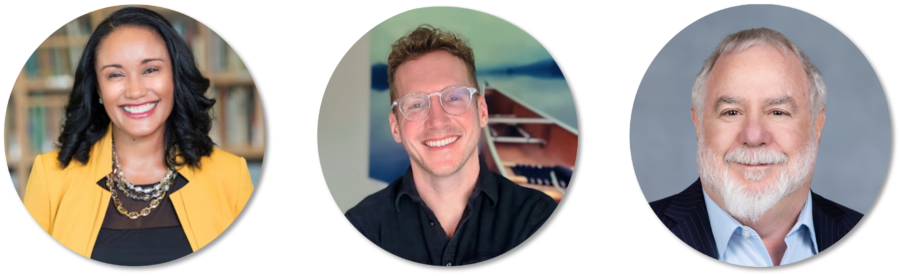
Domini Case Study Lessons Learned from a Decade of Implementation – Carole Laible, CEO @ Domini Social Investments
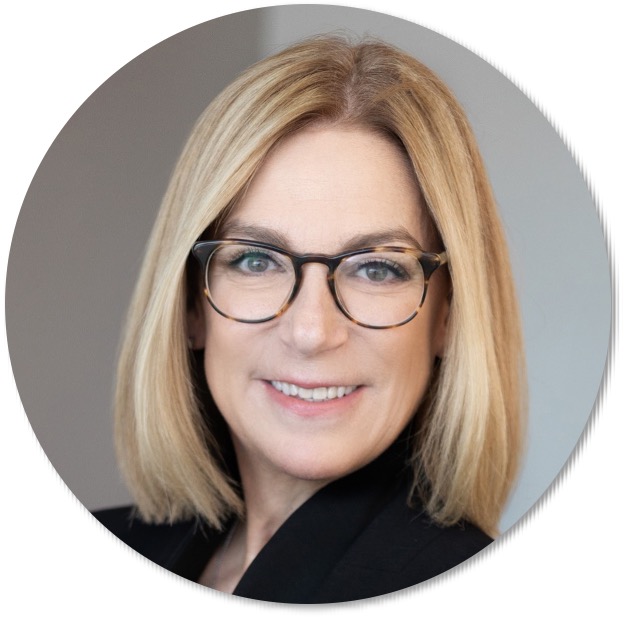
With frameworks in place, attention turns to the realities of long-term implementation. Carole Laible of Domini Impact Investments recounts what began as a seemingly straightforward task—setting goals for forest asset management—and evolved into a complex systems challenge. As subsystems collided and objectives conflicted, the path forward proved nonlinear and at times confounding. This session offers a candid account of detours, trade-offs, and lessons learned, highlighting the practical complexity investors face when managing real assets within interconnected systems.
CFA Institute Research & Policy Center View Reframing Financial Markets Through a Systems Lens – Genevieve Hayman, Phd., Senior Researcher @ CFA Institute Research and Policy Center
 To deepen the analytical foundations introduced earlier in the day, Genevieve Hayman of the CFA Institute Research and Policy Center presents findings from her 2025 report (co-authored with Raymond Pang), Reframing Financial Markets as Complex Systems. The session explores why viewing markets as dynamic, interconnected systems—rather than static, equilibrium-driven constructs—can materially improve how investors understand risk and design portfolios. Hayman introduces tools from complex systems science, including agent-based modeling and network theory, and explains how these concepts can enhance systemic risk analysis, illuminate feedback loops, and support more resilient portfolio construction.
Builder’s Vision + LGIM Case Study Different Organizations, Different Leverage Points – John Hoeppner
Head of Strategic Relationships & Active Ownership @ Builder’s Vision
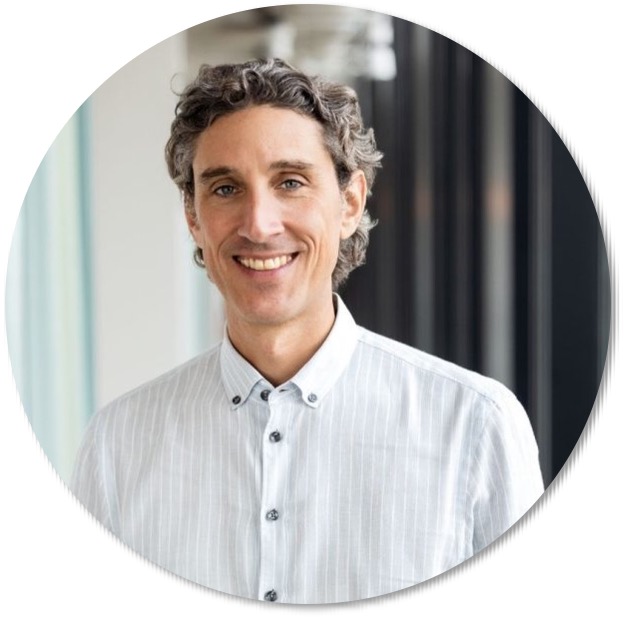
If markets function as complex systems, effective intervention depends on choosing leverage points that align with institutional capabilities. John Hoeppner contrasts his experience leading stewardship at a global asset manager with his current work at Builders Vision, where flexible capital is deployed to catalyze innovation and shift value chains. The session illustrates why system-level investing cannot be reduced to a standardized playbook—and why effectiveness depends on matching tools, capital, and culture to each organization’s role.
Nippon Life Case Study Aligning Ideas, Institutions, and Practice in System-level Investing – Takeshi Kimura, Special Adviser to the Board @ Nippon Life Insurance; Board Director @ PRI
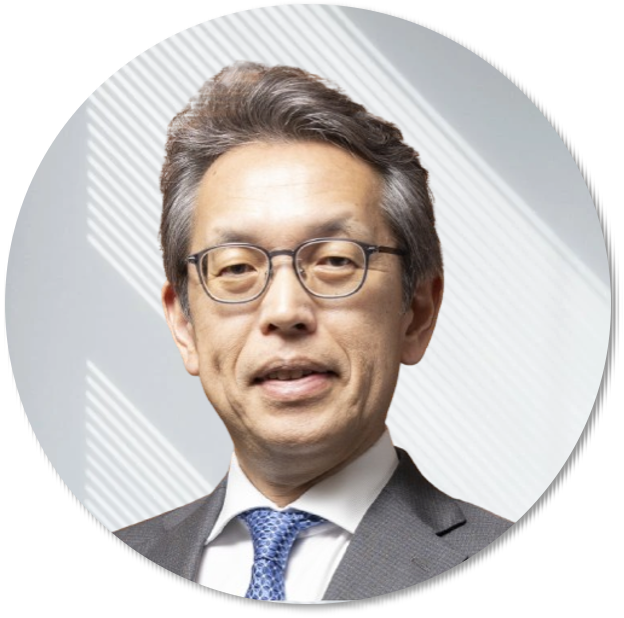 As system-level investing gains conceptual acceptance, its practical adoption has proven uneven and context-dependent. Takeshi Kimura of Nippon Life Insurance Company explores why a compelling idea has struggled to translate into consistent practice—and what that reveals about the current stage of the field’s evolution. Drawing on the perspective of a universal owner, Kimura argues that system-level investing is less a discrete strategy than a way of reframing risk and responsibility in markets not designed to accommodate systemic concerns.
Dialogue Field Building for System-level Influence
Internal guardrails and standards achieve scale only when supported by coordinated field-level action. Featuring Cambria Allen-Ratzlaff (PRI), Fran Seegull (USIIA), Georges Dyer (IEN), and Josh Zinner (ICCR), this session examines field building as a critical—but often underappreciated—lever for system-level investing. Moderated by Chavon Sutton of Cambridge Associates, panelists will explore how investors can shape shared norms, information flows, and policy environments, and why collaboration with peers—including competitors—is often essential to addressing risks no single investor can manage alone.
Moderator:
- Chavon Sutton, Managing Director, Sustainable & Impact Investing Research Group @ Cambridge Associates
Discussants:
- Cambria Allen-Ratzlaff, Interim CEO @ Principles for Responsible Investment (PRI)
- Georges Dyer, Co-Founder @ Crane Institute of Sustainability and Executive Director @ Intentional Endowments Network (IEN)
- Fran Seegull, President @ U.S. Impact Investing Alliance (USIIA)
- Josh Zinner, CEO @ Interfaith Center for Corporate Responsibility (ICCR)

System-level Investing Award Catalyst
Case Study Long-term Value Creation in a Changing World – Jake Barnett, Managing Director, Sustainable Investment Strategies @ Wespath Benefits and Investments

Jake Barnett of Wespath challenges conventional approaches to sustainable investing and argues that long-term value creation now requires investors to confront systemic risks directly—not as peripheral ESG concerns, but as core drivers of market performance. Drawing on recent work with the Church of England Pensions Board, Barnett offers a candid assessment of where the field has overreached, where it has fallen short, and what must change if asset owners are to move beyond incrementalism and play a credible role in shaping the systems on which their beneficiaries depend.
System-level Investing Award Visionary
Wrap Up Next Steps
In-person attendees can also grab a copy of the Handbook on System-level Investing and get their books signed by many of its authors on site. Our team looks forward to seeing you at the Symposium on April 14th!

Note: In-person attendance is limited due to space constraints. Virtual participation via Zoom will be available for those unable to attend on site. Click here for more details on the Eventbrite.
TIIPs Consulting Services
In 2015, TIIP’s Steve Lydenberg and William Burckart coined the term system-level investing. Since then, TIIP has been a driving force behind this transformative approach—publishing pioneering research and supporting some of the world’s leading investors in integrating system-level strategies.
Why System-level Investing?
System-level investing moves beyond traditional, sustainable and impact investing. It recognizes large-scale risks and opportunities, expands conventional investment strategies, and applies advanced techniques to foster resilient, adaptable, and healthy environmental, social, and financial systems.
Today, this approach is shaping institutional investment strategies globally. It is integral to the UN PRI’s “Pathway B,” distinguishing itself from traditional ESG integration (Pathway A) and impact strategies that may or may not consider systemic effects (Pathway C). (Source: UNPRI.org, “What is system-level investing?”, October 3, 2024.)
Want to learn more about our Total Portfolio suite of services?
- Total Portfolio Activation: Assesses readiness to build a strong foundation for system-level investing
- Total Portfolio Implementation: Provides practical tools and support for integrating system-level strategies
- Total Portfolio Reviews: Helps investors assess and refine their investment strategies
or Playbooks?
- Organization-wide System-level Investing Playbook: For the investor ready to align their entire portfolio with long-term systemic outcomes
Systemic Stewardship Playbook: For those ready to take their stewardship efforts to the system-level - Asset Class Specific Playbook: For investors seeking a sharper strategy that reflects the unique utility of a particular asset class to contend with a specific systemic risk, or intersection of risks
- Issue Specific Playbook for a Targeted Geography: For investors navigating a pressing issue area — or a tangle of converging risks, we diagnose the systemic dynamics at play in your priority geographic area (whether local, national, regional or global) and deliver actionable guidance tailored to you
- Capital Needs Assessment and Playbook for a Targeted Geography: For investors with a stake in a specific place, we assess the capital gaps in your priority geography — city, region, or country — and build a playbook for deploying capital where and how it’s needed most
or SAIL, our subscription based platform to learn about or implement system-level investing?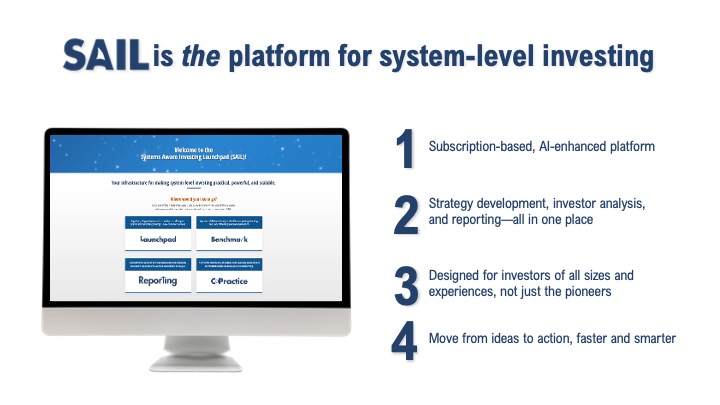
If you’re interested in becoming a SAIL subscriber, want to explore if a Total Portfolio service or one of our Playbooks would work for you, just email us to explore the possibilities at [email protected]. Any symposium registrant that reaches out prior to April 14th and signs a contract before June 1st will receive 10% off any consulting service or their SAIL subscription.
Join the Leaders in System-level Investing
Our expertise has helped inform and support the strategies of pioneering institutions, including CalSTRS, Domini Impact Investments, the Surdna Foundation, University Pension Plan (UPP), Wespath Benefits and Investments, and more.
Are you ready to evolve your investing approach? Together, let’s take your policies, programs, and practices to the system level.
Follow us on LinkedIn to keep up with the latest TIIP news and find out how to join the system-level investing movement. Have questions about system-level investing? Email us at [email protected].